AI revenue tools are decision-support systems, not replacements for GM judgment. When designed well, AI executes pricing strategy more consistently while GMs retain control over goals, guardrails, and brand considerations.
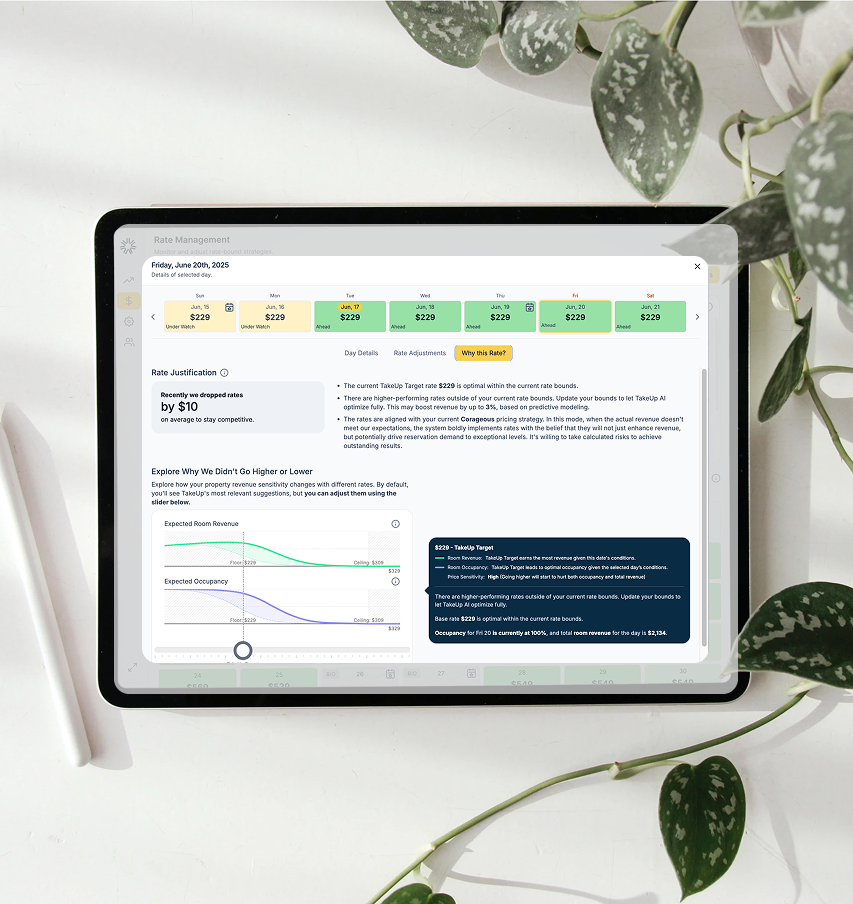
Transparency and control are non-negotiable for effective adoption. Modern AI tools must clearly explain why prices change, surface the demand signals behind decisions, and allow GMs to set boundaries and intervene when needed.
AI pricing delivers the fastest impact for independent and understaffed hotels. By eliminating manual rate checks and systematically testing price sensitivity, smaller properties often uncover revenue opportunities they would not identify on their own.
The strongest ROI case focuses on revenue lift and time savings, not technology. Owners care about ADR and RevPAR improvement, reduced manual effort, and defensible pricing decisions backed by data rather than intuition.
If you are a hotel general manager, you have likely heard plenty of buzz about AI revenue tools. You may have also felt a mix of curiosity and skepticism. On one hand, revenue performance sits squarely on your shoulders. On the other, many AI hotel pricing tools sound complex, opaque, or designed to replace the very judgment you have built over years in hospitality.
This blog is here to change that.
AI revenue tools are not about handing your hotel over to a black box. When designed correctly, they are decision-support systems that help you price with more confidence, react faster to demand shifts, and explain your strategy clearly to owners and management companies. This guide breaks down what AI revenue tools actually do, how they preserve GM control, and how hotels of any size can implement them successfully.
By the end, you should feel equipped to evaluate hotel revenue management software with clarity rather than caution.
At their core, AI revenue tools are systems that analyze large volumes of data to make smarter pricing decisions for your hotel.
In plain language, they answer one core question every day:
What price should each room be sold at right now based on real demand?
To do that, modern AI revenue tools look at factors such as:
Unlike static rate grids or manual spreadsheets, AI hotel pricing tools continuously learn from new data. As conditions change, pricing adjusts in near real time. For more detail, check out our blog post that compares AI pricing tools to rules-based pricing.
The most important clarification for GMs is this:
AI revenue tools do not replace strategy. They execute it more consistently.
Think of AI as a highly disciplined analyst who never sleeps, never forgets data, and never hesitates to test price sensitivity. You still define the goals, guardrails, and priorities.
One of the biggest fears around revenue automation in hotels is loss of judgment. Many GMs worry that AI will override experience, intuition, or brand considerations.
The reality with well designed AI revenue tools is the opposite.
What AI Does Well
AI excels at:
What GMs Do Best
You bring:
The most effective hotel revenue management software blends these strengths. AI handles the complexity and repetition. You focus on oversight, strategy, and alignment.
In practice, this means:
AI does not eliminate your role. It elevates it.
Another common concern is transparency. Many legacy systems and early AI tools felt like black boxes. Rates changed without clear explanations, leaving GMs unable to justify decisions internally.
Modern AI revenue tools are designed with transparency as a core requirement.
What Transparency Looks Like in Practice
GM friendly AI hotel pricing tools provide:
Control also matters. You should retain the ability to:
AI revenue tools work best when control and automation coexist.
There is a misconception that AI revenue tools are only for large chains with dedicated revenue teams. In reality, smaller and independent properties often see the fastest impact.
For Boutique and Independent Hotels
AI revenue tools help by:
Many independent hotels discover that guests are willing to pay more on certain dates than expected, simply because pricing had not been tested systematically before.
For Mid Size and Large Properties
Larger hotels benefit from:
AI revenue tools scale decision making without adding headcount.
Implementation Reality
Modern hotel revenue management software typically:
Most properties see measurable improvements within the first 30 to 90 days, not years.
One of your key responsibilities as a GM is justifying technology investments. AI revenue tools make this easier when framed correctly.
Key ROI Metrics Owners Care About
When presenting AI revenue tools, focus on:
For example:
Timeframe Expectations
Be clear and realistic:
This is not about overnight miracles. It is about sustained topline revenue improvement.
Talking Points for Ownership Conversations
Use language owners understand:
Avoid technical jargon. Focus on outcomes and accountability.
If you are evaluating AI revenue tools, keep these principles in mind:
When these criteria are met, AI revenue tools become one of the most practical upgrades a GM can make.
AI revenue tools are no longer experimental. They are practical, accessible, and increasingly essential in modern hotel revenue management.
The right system will not make you feel less in control. It will make you more confident in every pricing decision you oversee.
If you are exploring hotel revenue management software and want an approach designed for general managers, TakeUp is built to meet you where you are.
Learn how TakeUp supports GM led revenue strategy without complexity and see how AI can work for you, not instead of you. Book a Demo today.
Get the latest independent hotel insights delivered straight to your inbox
Sign up for our no fluff newsletter, Independent Edge
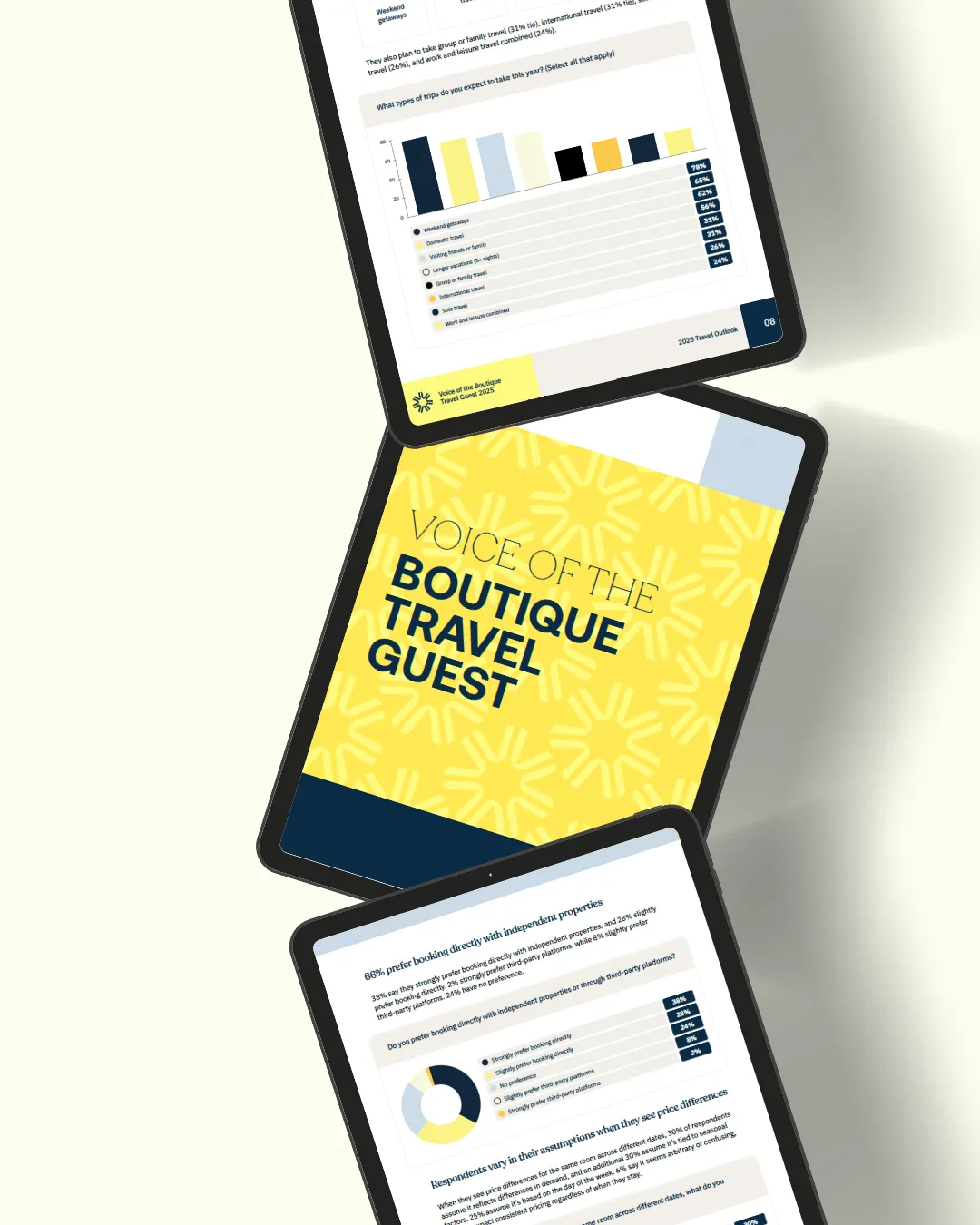
What today’s travelers want, how they book, and what drives their decisions. Your must-read playbook for attracting guests in 2025.
Independent Edge
Get the latest independent hotel insights delivered straight to your inbox. Sign up for our no fluff newsletter, Independent Edge

Enter your details below to create your account and get started.