Group Pricing and Displacement: A Practical Guide for Hotels

Blog post title "Group Pricing Displacement" displayed on black transparent background with corporate group at hotel.
Table of Contents
Group Pricing and Displacement: A Practical Guide for 100+ Room Hotels
TL;DR: Group Pricing & Displacement for 100+ Room Hotels
  • Best for: Hotels with 100+ rooms managing regular group business

  • Primary users: Revenue Managers, GMs, Owners

  • Main challenge: Group bookings displacing higher-paying transient demand

  • Key decision: Whether a group rate protects or leaks peak-night revenue

  • Common mistake: Accepting groups based on volume instead of opportunity cost

  • What helps most: Clear forecasting signals and displacement-aware pricing

If you manage revenue for a 100+ room hotel, group business can feel like a win… until it quietly costs you money.


That’s where displacement comes in.


Displacement helps you answer one simple question:


Will this group booking replace higher-paying business I could have sold later?


In modern hotel revenue management software, displacement is one of the clearest ways to protect peak dates, reduce revenue leakage, and make smarter pricing decisions. And with hotel revenue management AI, this process is getting faster, easier, and more accurate.


Let’s break it down in a practical way.

 
What Is Displacement (And Why It Matters)?


Displacement happens when a group booking takes up rooms you could have sold at a higher rate to other guests.


For large hotels, this matters because:


  • Groups can fill a big block of inventory quickly

  • Peak nights often sell out without discounts

  • One underpriced group can reduce total revenue by thousands

Displacement is not about avoiding groups. It’s about pricing them correctly.


Think of it like this:


A group isn’t “good business” just because it brings volume. It’s good business if it brings more revenue than your other options.


That’s the heart of smart ai revenue management.

 
A Simple Displacement Framework for Group Pricing


You don’t need complex math to make a good displacement decision.


Here’s a practical framework you can use today.


Step 1: Start With the Group Offer


Ask:


  • How many rooms do they want?

  • What rate are they offering?

  • Which nights are included?

Example:


  • 40 rooms

  • $180 per night

  • Friday and Saturday

Group revenue:


40 rooms × $180 = $7,200 per night


Step 2: Estimate What You Would Sell Without the Group


Now ask:


If I don’t take this group, what would I sell those rooms for?


Look at your expected transient rate.


Example:


  • Forecasted transient ADR: $260

  • Expected occupancy without group: 92%

If those 40 rooms would likely sell at $260:


40 × $260 = $10,400 per night


Step 3: Calculate the Displacement Cost


Displacement cost is the revenue you give up.


$10,400 (transient)


– $7,200 (group)


= $3,200 displaced per night


That’s real revenue leakage.


Step 4: Decide the Right Move


You have three options:


  • Accept the group if it’s low demand

  • Reject the group if it displaces peak revenue

  • Reprice the group to cover displacement

In this example, the group rate would need to be closer to $260 to make sense.


This is exactly where strong hotel revenue management AI can help by showing the true value of those rooms.

table with gold and green place settings and wine glasses for special event
 
Forecasting Signals That Tell You to Protect Peak Dates


Displacement decisions get easier when you know what signals to watch.


Here are the biggest indicators that a date is “too hot” to discount.


1. Occupancy Is Already Trending High


If you’re pacing toward:


  • 85%+ occupancy

  • Strong pickup week over week

  • Limited rooms left

That date is not a group discount date.


2. You’re Seeing Last-Minute Booking Strength


Some hotels get a surge in bookings 7–14 days out.


If your property historically fills late, don’t give away inventory early.


This is where ai revenue management models that learn guest price sensitivity can be a game changer.


3. You Have Other Demand Sources Competing


Watch for:


  • Citywide events

  • Weddings and social business

  • Airline disruptions

  • Conference overflow

Groups aren’t your only customers.


Your rooms have options.


4. Length of Stay Patterns Matter


A group arriving on a peak Saturday might block:


  • Higher-paying weekend travelers

  • Longer-stay guests who would book Friday through Sunday

That creates displacement beyond just one night.

 
Common Group Pricing Mistakes That Cause Revenue Leakage


Even experienced revenue leaders make mistakes with group business. Here are the most common ones.


Mistake #1: Only Looking at Total Room Revenue


A group bringing in $50,000 sounds great.


But the better question is:


What would those rooms earn without the group?


Displacement is about opportunity cost.


Mistake #2: Treating Every Group Like Base Business


Not all groups are equal.


Some groups are price-sensitive and need discounts.


Others will pay full value because they have no alternatives.


Good hotel revenue management software helps you see the difference.


Mistake #3: Ignoring Forecast Changes After Contract Signing


Markets move fast.


A rate that felt fine 6 months ago might be a loss today.


Hotels need pricing decisions that adjust with demand.


Mistake #4: Protecting Too Late


Many hotels accept group blocks early, then realize later:


“We could have sold out at $100 more.”


That’s classic revenue leakage.


Peak dates require early protection.


Mistake #5: Overcomplicating the Process


Displacement doesn’t need a 12-tab spreadsheet.


You need:


  • Clear demand signals

  • Simple math

  • Smart pricing discipline

Technology should make this easier, not harder.

 
Final Takeaway: Protect Peak Nights With Practical Displacement Thinking

Group business can be valuable.


But peak nights are even more valuable.


Displacement gives you a simple way to make sure your group pricing decisions match the true worth of your inventory.


Remember:


  • Peak dates deserve protection


  • Groups must pay for the space they consume


  • Forecasting signals tell you when to hold firm


  • The right hotel revenue management software makes the process faster and clearer


With smarter frameworks and better tools, hotels can reduce revenue leakage and make confident decisions all year long.


And that’s exactly where ai revenue management comes in.

FAQs: Common Questions About Group Pricing and Displacement

What is displacement in hotel group pricing?

Displacement is the revenue you give up when a group booking replaces higher-paying transient demand you could have sold later, especially on peak dates.


How do I know if a group booking is displacing revenue?

Compare the group rate to your forecasted transient ADR and expected occupancy. If those rooms would likely sell for more without the group, the difference is displaced revenue.


Should hotels always accept group bookings for volume?

No. Groups are only good business if they generate more revenue than alternative demand. On high-demand dates, accepting discounted groups often leads to revenue leakage.


How does hotel revenue management software help with displacement decisions?

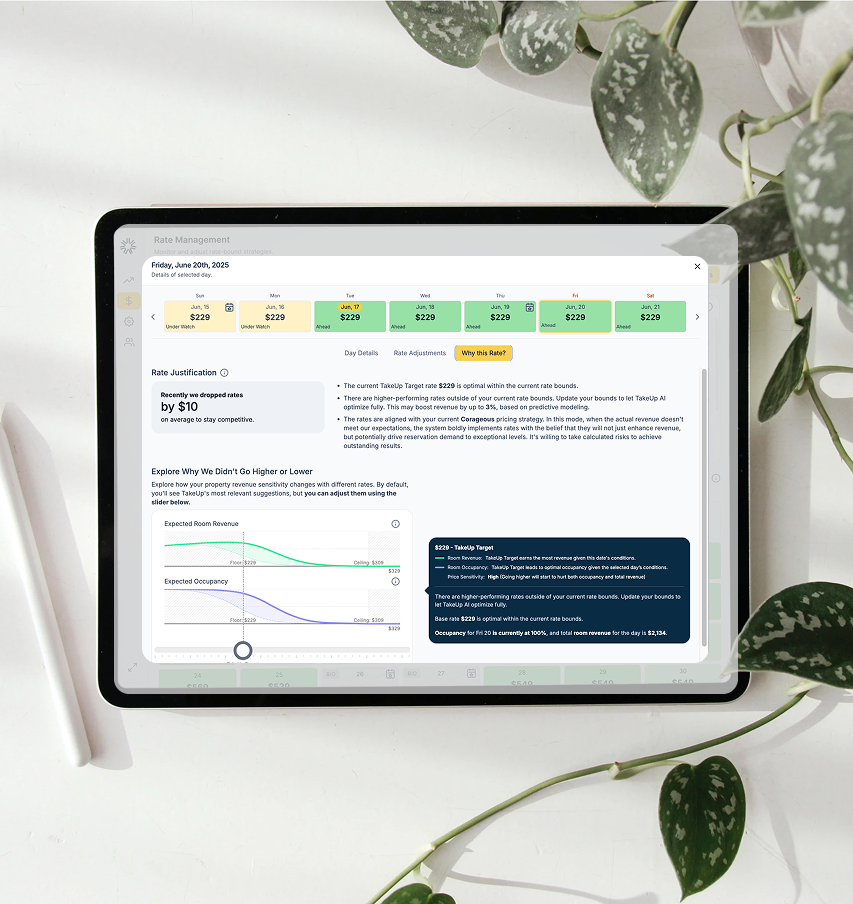
Modern hotel revenue management software, like TakeUp AI, helps hotels evaluate true demand, forecast peak dates, and price group business based on real opportunity cost rather than guesswork.

Get the latest independent hotel insights delivered straight to your inbox

Sign up for our no fluff newsletter, Independent Edge

Table of Contents
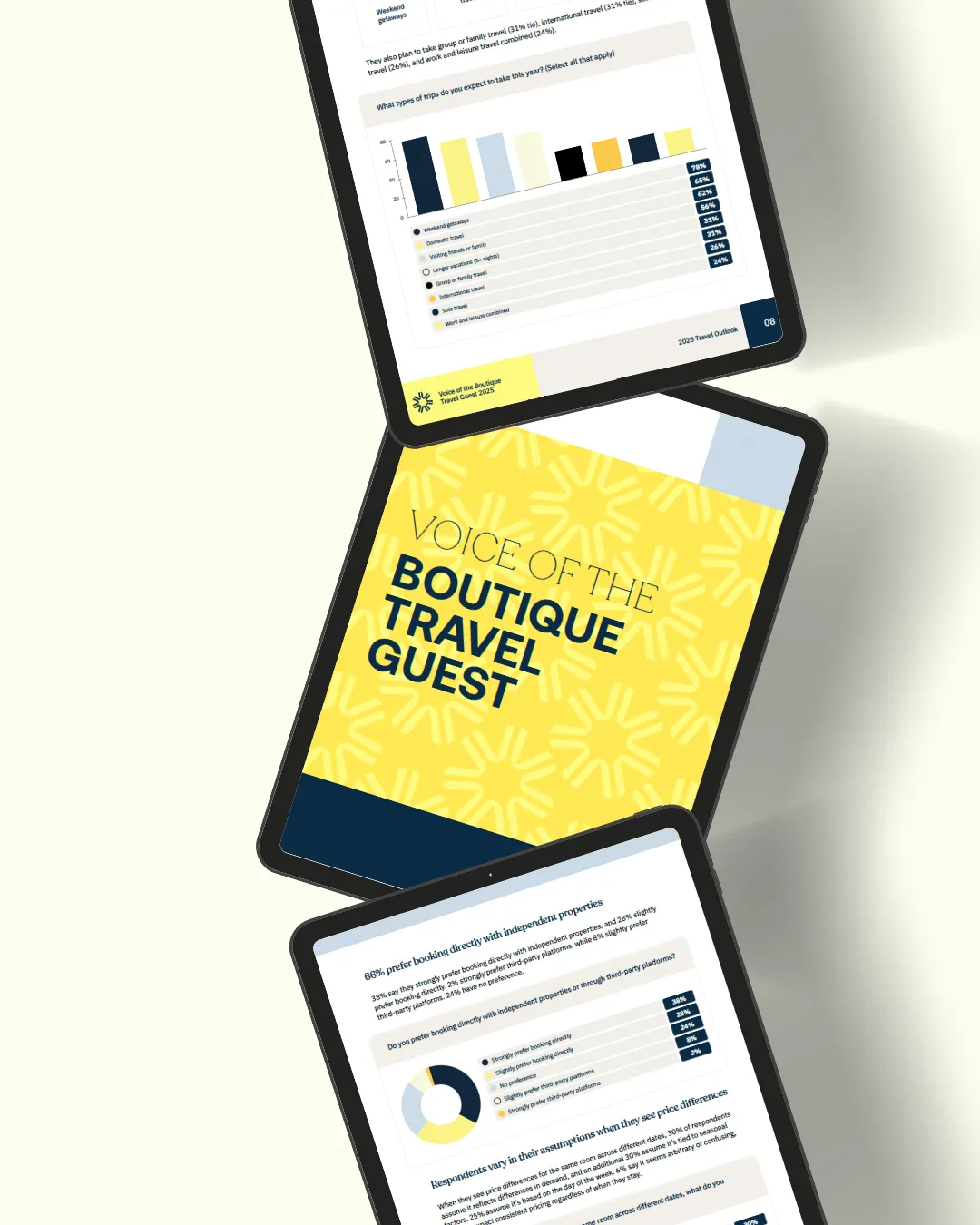
Get the 2025 Industry Report: Voice of the Boutique Hotel Guest

What today’s travelers want, how they book, and what drives their decisions. Your must-read playbook for attracting guests in 2025.

explore related articles

m

Summarize this blog post with AI
TakeUp AI logo - AI hotel revenue management software for independent hotels

Sign Up

Enter your details below to create your account and get started.