Near-term performance is still developing: April pacing does not fully reflect final demand, with meaningful opportunity to build occupancy as we move closer to stay dates.
Price sensitivity is elevated in April: With bookings still coming through but at lower rates, staying responsive on pricing will be key to capturing remaining demand.
Early indicators for May are strong: With both occupancy and ADR pacing ahead of last year, demand is showing up earlier and at higher price points.
Avoid discounting too early where demand is holding: In periods like May, where performance is already ahead, maintaining rate will be important to maximize revenue.
Is Demand Soft… or Just Early? What March, April, and May Are Really Telling Us
Right now, the booking data is telling two different stories, depending on where you look.
Some properties are seeing real momentum. Others are still waiting for it to show up. And in between, there’s a lot of noise about what’s actually happening with demand.
Looking across March performance and forward pacing into April and May, one thing is clear:
This isn’t a demand problem. It’s a price sensitivity problem.
March proved demand is still active. April is less defined than it appears. And May is already giving early signals of strength.
Here’s what we’re seeing in the data and how smart operators are responding.
March Demand Was Strong But More Price Sensitive
March outperformed last year in a meaningful way but not across every metric.
Occupancy: +8 points YoY
ADR: -20% YoY
RevPAR: +28% YoY
At a glance, that ADR drop stands out. But here’s the more important takeaway:
Demand didn’t disappear. It just got more selective.
Guests were still booking. They just weren’t willing to pay the same rates they did last year.
And in this kind of environment, occupancy growth can still drive strong performance as long as pricing stays responsive.
It’s also worth noting: this wasn’t universal.
Some properties saw gains like this. Others are still pacing behind last year.
We’re continuing to see a split across the industry:
Markets driven by domestic leisure are holding stronger
Markets relying on international demand are seeing more variability
Which means there’s no single “market trend” to rely on right now.
You have to respond to your demand—not the narrative.
April Isn’t Weak, It’s Just Early
April pacing is currently slightly behind last year:
Occupancy: -1 point YoY
ADR: -12% YoY
That might look like softening demand. But zoom out for a second.
A one-point gap in occupancy doesn’t signal a demand drop, it signals timing and price sensitivity.
Bookings are still coming in. They’re just converting at slightly lower rates, and in some cases, later in the window.
There are a few forces at play:
More mixed international inbound travel
Greater reliance on domestic demand
Slower early-cycle booking buildup in certain markets
But if you’ve been through a few booking cycles, you know what this means:
April is still very much in motion.
A meaningful share of bookings for this month hasn’t landed yet.
Which is exactly where operators tend to make the wrong move.
They see softer pacing… and drop rates early.
But early discounting doesn’t create demand, it just locks in lower revenue for the demand that was already coming.
May Is Already Showing Strength
Now for the clearest signal in the data:
May is pacing ahead of last year—on both occupancy and rate.
Occupancy: +5 points YoY
ADR: +21% YoY
This is what healthy demand looks like.
Not just bookings increasing—but willingness to pay increasing alongside it.
We’re starting to see the typical seasonal shift:
Stronger leisure demand
Earlier booking confidence
Peak travel periods filling in sooner
And this is where discipline matters most.
Because when both occupancy and ADR are ahead, the goal isn’t to “stimulate demand.”
It’s to protect rate and let demand do its job.
Strategy Tip: Stay Responsive, Not Reactive
When pacing is uneven, it’s easy to fall into reactive pricing.
But the operators outperforming right now are doing the opposite.
They’re staying disciplined early and responsive as demand actually materializes.
A few principles we’re seeing work:
Hold stronger pricing further out
Don’t discount just because bookings haven’t landed yet.
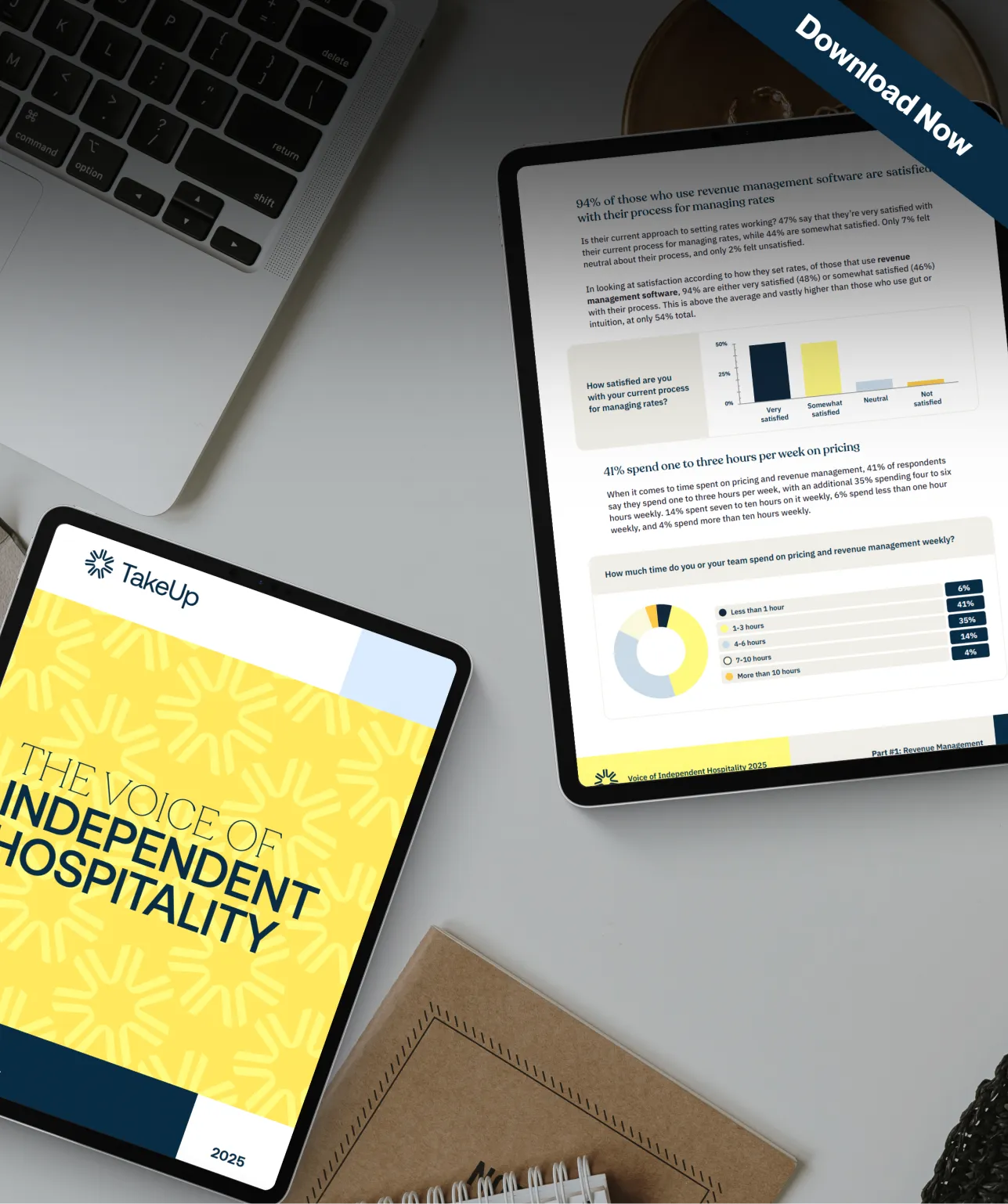
Read how 300 U.S. travelers are responding to economic pressure, pricing shifts, and changing trip priorities. It shows where demand remains resilient, how behavior is fragmenting across segments, and what independent hotels need to know as price sensitivity rises.